April is home to Earth Day, Arbor Day, and a few lesser-known environmental holidays, which makes it the perfect month to highlight some of the things farmers do as stewards of land + water resources! Here are all four parts of our social media series in one place.
Sustainability
In a month focused on the environment, we would be remiss to not talk about sustainability. But did you know that sustainability has to do with more than the environment? There are three areas of sustainability- environmental, economic, and social. Depending on who you talk to, these might be called “pillars,” “legs,” or “principles.” Whatever you call them, all three parts are necessary to achieve true sustainability: the ability to meet the needs of the present without compromising the needs of the future.
What does this look like on the farm? Farmers are implementing various practices that protect and improve our soil and water resources so that the next generation of farmers have quality, healthy resources to continue to grow food, fuel and fiber for the world. They are also making economic decisions that will allow the operation to remain viable for themselves and the next generation. This can be anything from paying off loans to investing in new technology or equipment that will improve productivity. Finally, farmers are contributing to vibrant communities and meeting the needs of their families, neighbors, consumers, and others in the food system.
Sustainability is a journey, and it is incredibly relative and constantly changing. Farmers are continuously adjusting to the evolving world to become more sustainable. To find out more about what our volunteers are doing to enhance sustainability on their farms, check out the sustainability page on our website: commongroundminnesota.com/sustainability
Crop Rotation
When farmers started crop rotation over 8,000 years ago, they may not have understood the scientific intricacies of what was happening, but they just knew that their crops did better when they practiced crop rotation. The reasons for this vary, but we’ll run through an example we see everywhere in Minnesota today: corn and soybeans.
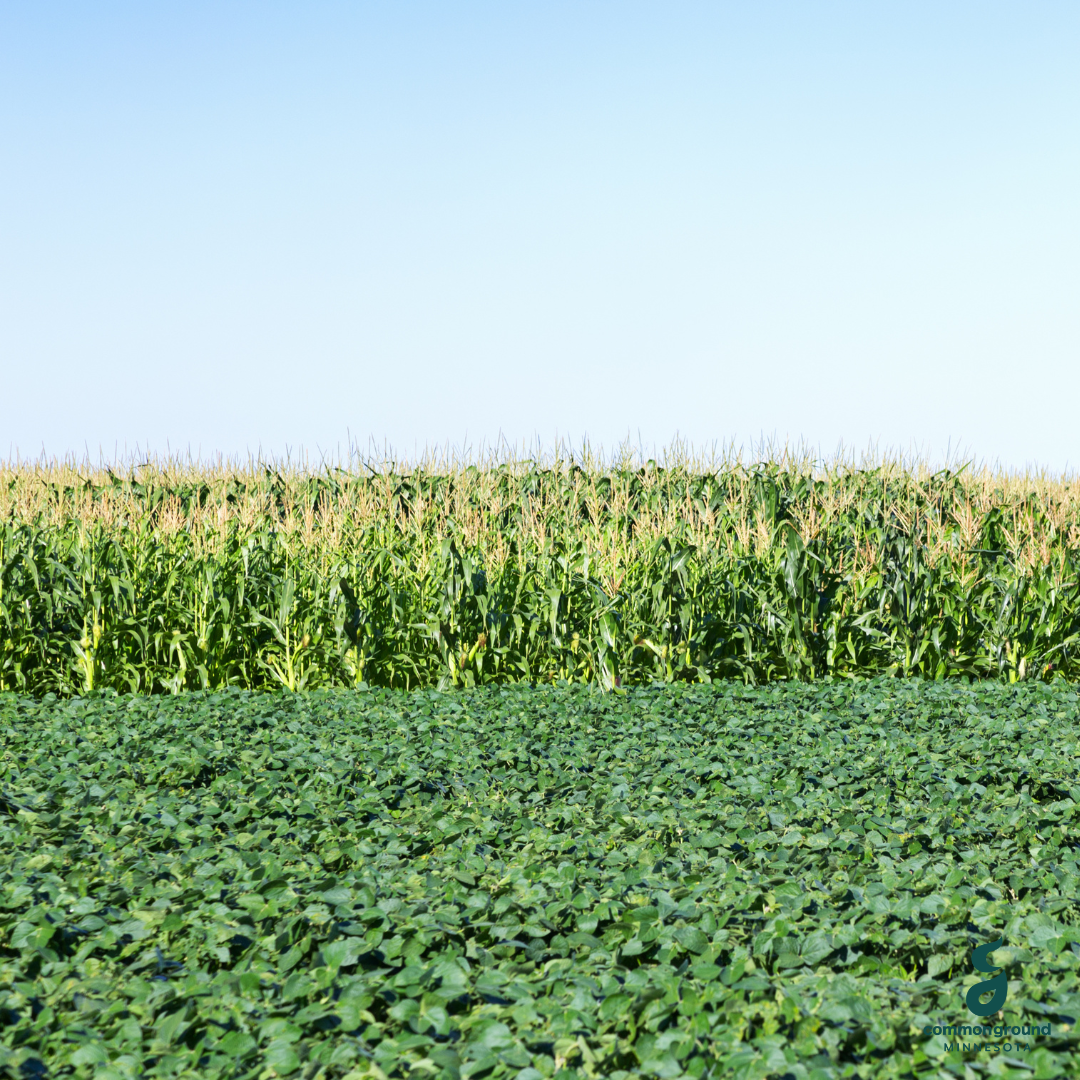
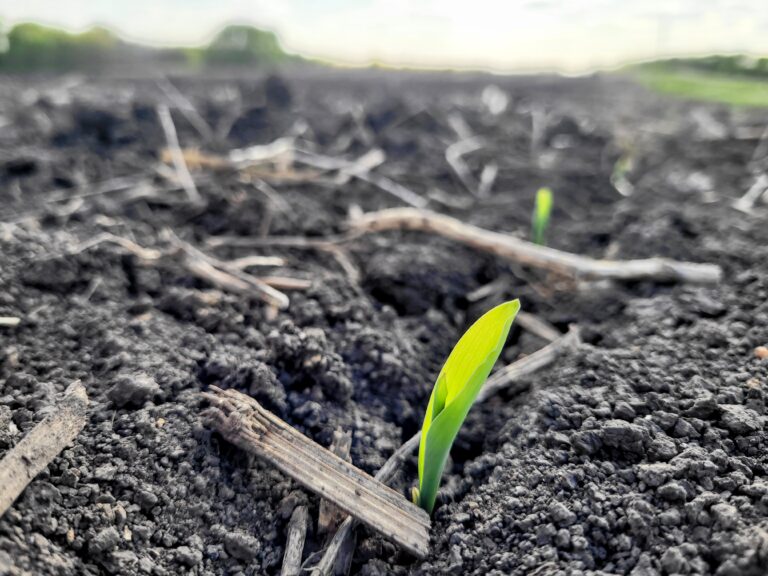
Corn and soybeans are frequently planted in the same fields in alternating growing seasons. Corn is a grass that requires a lot of nitrogen to grow and thrive. Soybeans are a legume that have the ability to “fix” nitrogen. They take nitrogen from the air and store it in their roots, which remain in the ground after harvest. The corn planted the following season can utilize this nitrogen, rather than requiring additional fertilizer applied by the farmer.
Different crops also have different susceptibility to pests and diseases, so by rotating the crops in a given field, pests and diseases have less of a chance to become established and damage the crop.
Of course, every farm and each field is different, and farmers frequently conduct soil tests and implement changes if the tests or other research shows a need to do so. In general, crop rotation reduces the inputs on to the field, reduces equipment time, and allows farmers to diversify their farm!
Buffers
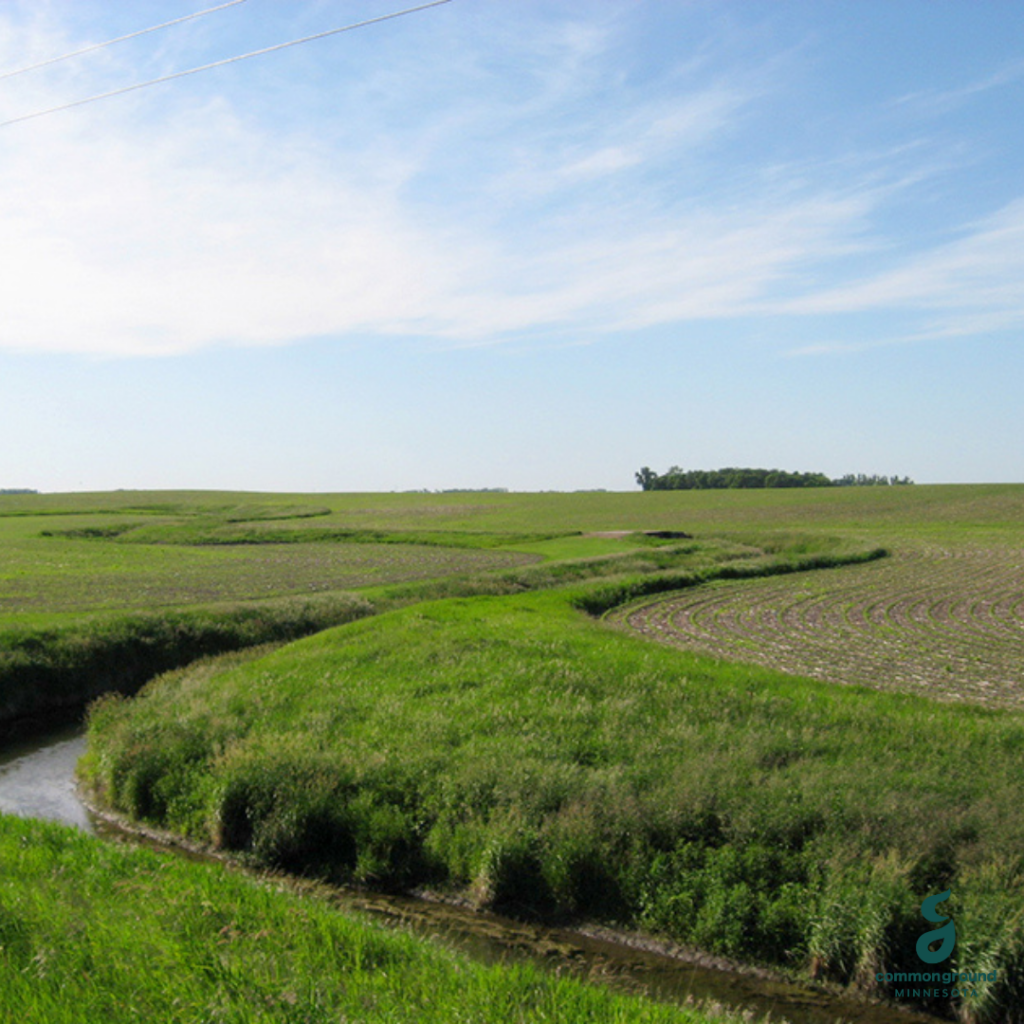
If you’ve ever driven through rural Minnesota, you’ve probably seen something like the picture here: a swatch of grass between the field edge and lakes, rivers, streams, and ditches. These are called buffers or riparian strips, and they help filter out any excess nutrients or sediment.
99.8% of Minnesota farmers have implemented buffers along public waterways and ditches after the buffer law was passed ten years ago. This required taking a strip of land out of traditional production and planting some perennial vegetation- plants that come back year after year without requiring replanting.
Farmers Care
All month, you’ve heard about various practices that farmers have implemented to better protect the environment. A common theme many of our volunteers have shared over the years is that farmers care about the environment. They live on the land where they work, raise their families there, and hope and dream that someday, the next generation can take over the farm. Jeopardizing the sustainability of the farm on any front- especially environmental- simply isn’t in the best interests of their operation, their livelihood, or their plans for the future. Our environment is such a scientifically complex place. Farmers do the best they can every day to make decisions that are in the best interest of the land while remaining sustainable on other fronts as well. Farming has changed so much in the last few decades because of new research findings and will continue to evolve. Our volunteers and farmers across the U.S. will continue to evolve as well, because they know:
“It’s not ours, it’s just our turn.”