September is National Potato Month! In celebration, we’ve been sharing information + insights about potatoes all month long. Here’s our entire social media series in one place for easy reading! Have a question? Send us an email at hello@commongroundminnesota.com + we’ll get right back to you!
Potatoes in Minnesota- Farms, Production, and Value
Did you know potatoes are grown in Minnesota? 🥔
According to the USDA, we’ve got 509 potato farms, and together they plant around 46,000 acres of potatoes every year. Each acre averaged a yield of 415 hundredweight (the common measurement of potatoes- it means, you guessed it, 100 pounds!). If we’re using the calculator right, that means Minnesota produced approximately 1.9 billion pounds of potatoes in 2023. That’s a LOT of spuds!
Those numbers tell the story of a crop that’s deeply rooted in Minnesota’s ag economy. Whether they’re headed for fresh eating, chips, or fries, potatoes are a reliable staple crop and a big win for both farmers and consumers.
How Potatoes Grow- From Seed to Harvest
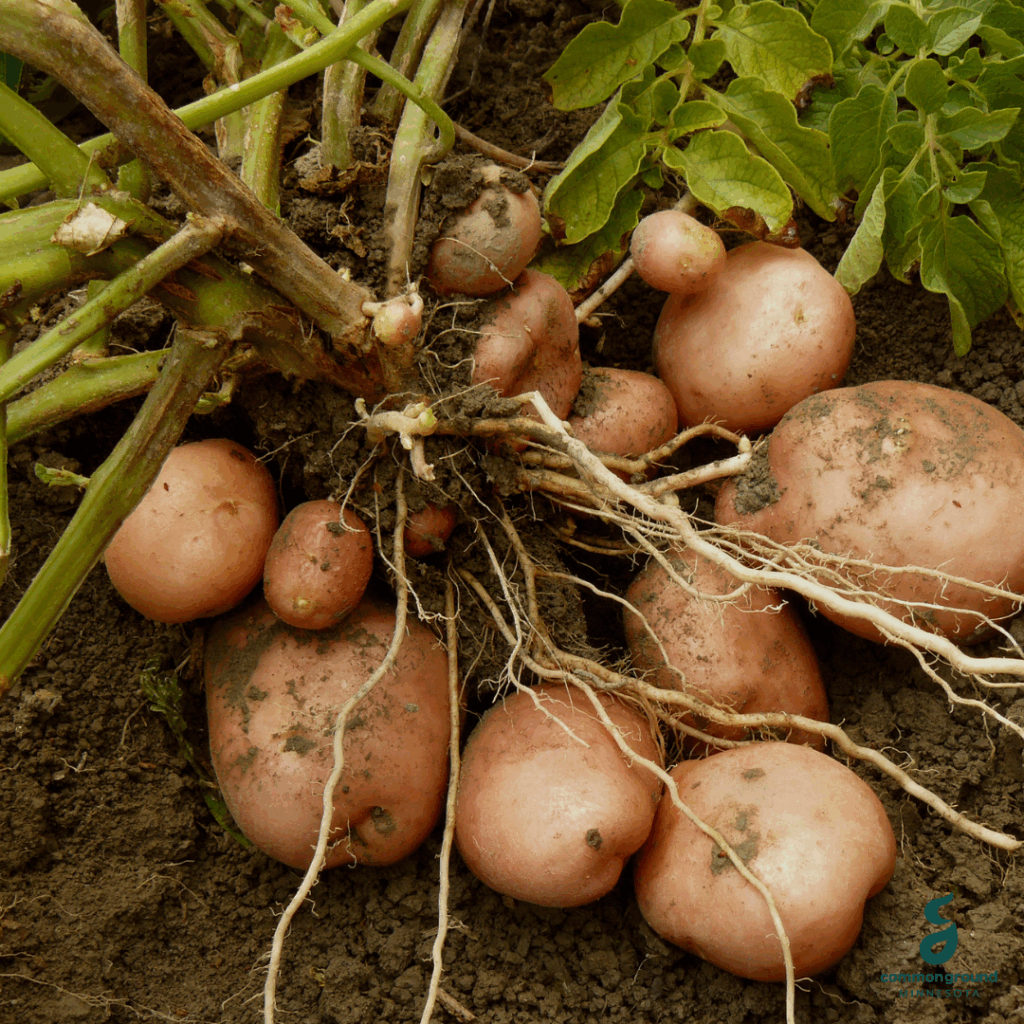
Ever wondered how potatoes grow? Unlike a lot of crops, it’s not from a traditional seed- it’s actually from pieces of potato called seed potatoes, each with a bud or “eye” that sprouts.
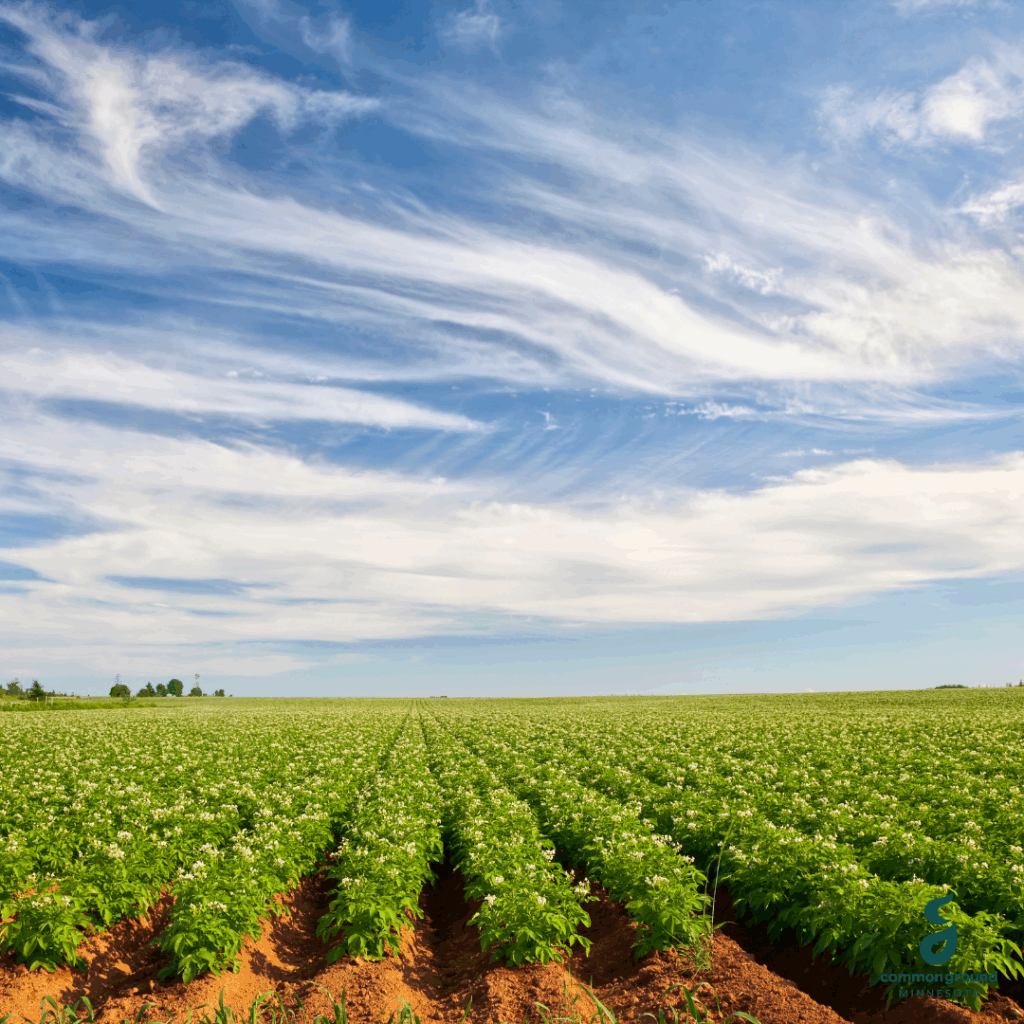
In the potato growing process, farmers prepare fields carefully, plant the seed pieces, and as the plants grow, they “hill” the soil up, creating the deep furrows you see in potato fields. The soil covers the stolons, or underground stems, that the new tubers grow on, which keeps tubers covered. Potatoes are in constant danger from diseases and pests, which is why farmers usually rotate their potato fields and only grow them once every four or so years.
Farmers also keep a close eye on soil health, irrigate (or “water”) their potatoes regularly, and apply fertilizer when it is needed. It’s a mix of science and hands-on care that leads to quality harvests. So the next time you bite into a crispy fry or creamy mash, you’ll know the journey started with a tiny potato eye and a whole lot of farming know-how. 🌱
For more detailed information on the potato growing process, here’s a great resource: https://www.potatoes.com/about-us/our-farms/how-we-grow
Potato Storage- Keeping Spuds Fresh All Year
Harvest is only the first step—keeping potatoes fresh and high quality takes some serious storage smarts.
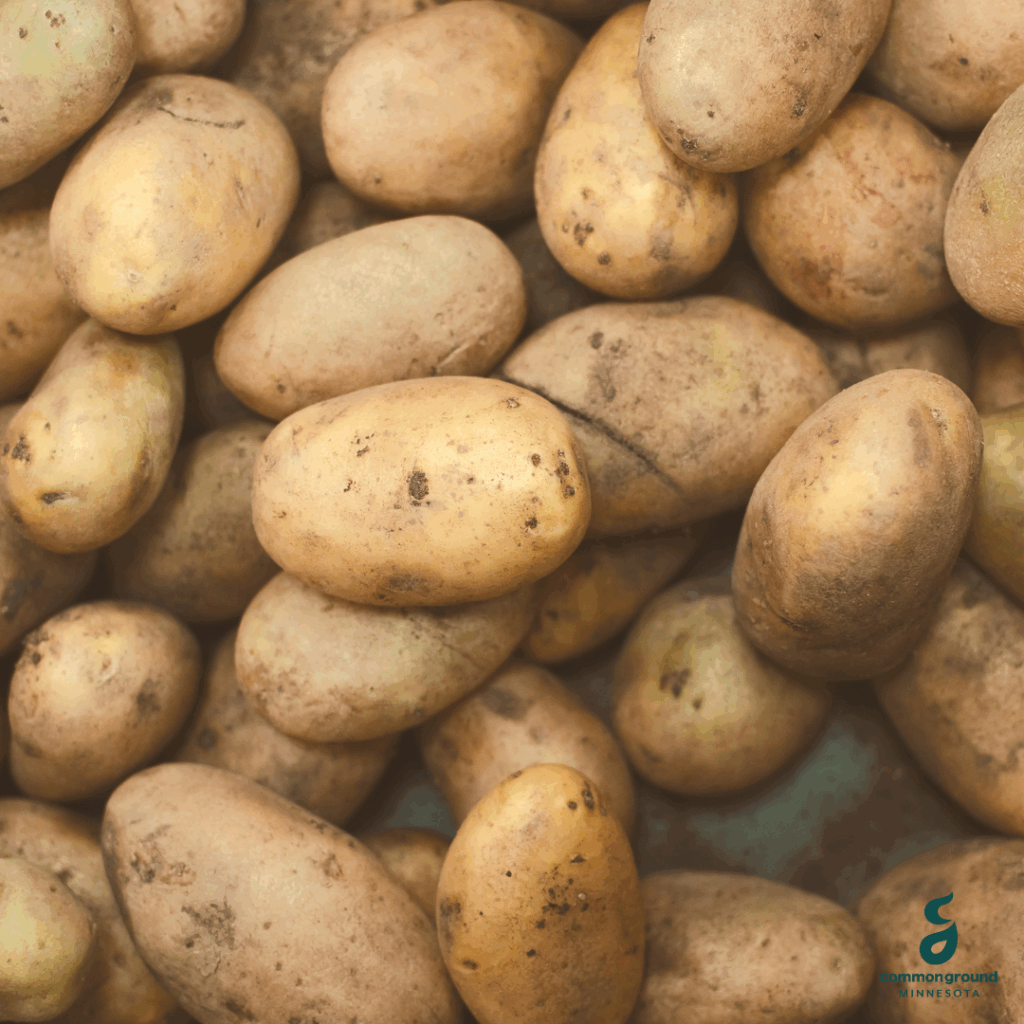
Modern potato storages are huge buildings with advanced systems for ventilation, temperature, and humidity. Farmers have to manage airflow and moisture carefully to keep spuds from spoiling before the processor is ready for their harvest- which can be quite a long time after the harvest. Done right, potatoes can last 9–12 months in storage, giving us a year-round supply for fresh eating and helping smooth out the demand on the processing facility that makes these potatoes into all the potato products we know and love!
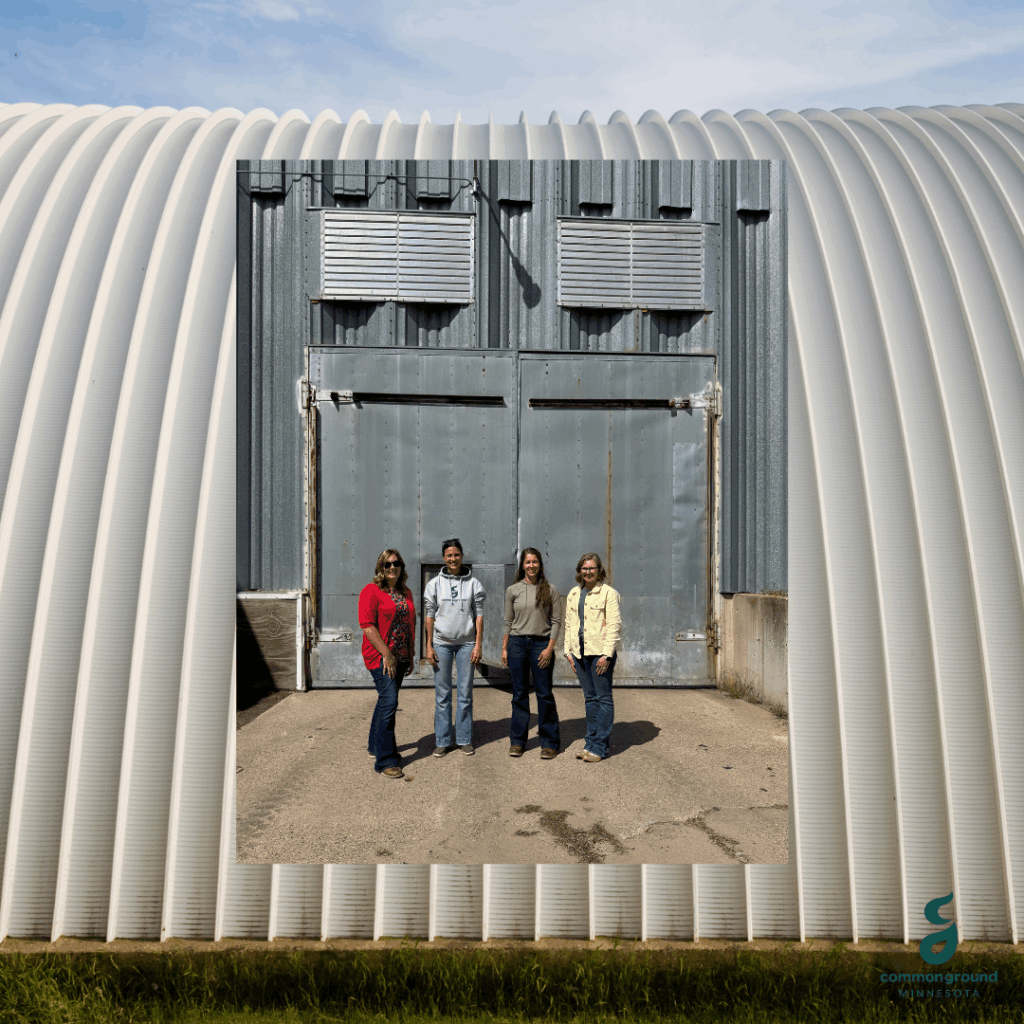
Recently, our potato farming volunteer, Jocelyn, had us out to tour her farm and we got to see these potato storage facilities in person. Comparing an older facility and a newer facility, the changes are incredible- yet the premise and basics are the same. It’s a true testament to how agriculture is constantly improving, and how farmers have always been in tune with the environment and their crop.
The Many Uses of Potatoes
Potatoes can be so much more than the basic French fries, mashed potatoes, or baked potato (although let’s be honest, fries will always have our ❤️)
Around the world, spuds take on endless forms:
In Peru and Bolivia, they’re freeze-dried into chuño, a tradition going back centuries.
In the UK, roast potatoes and fish & chips are iconic comfort foods.
In Lithuania, you’ll find potato dumplings called cepelinai– described at the “National Food” of the country.
In Italy, potatoes are used to make pillowy gnocchi.
But potatoes aren’t just food. 3% of vodka sold globally is made from potatoes. Potatoes are also be processed into starch for paper and textiles, and even studied in science labs for their unique cell structure. Farmers also feed extra or imperfect spuds to livestock, making sure nothing goes to waste.
It’s no wonder the potato is one of the most widely grown crops on earth: it’s adaptable, nourishing, and just plain delicious, no matter how you slice it.