Written by Brittany Johnson. Less than 2% of Americans are farmers, yet 30% of jobs in the U.S. fall into the food and agriculture sector. Brittany and her husband fall into that 28%. They serve farmers! Here’s a snippet of an annual event they host for their farmer clients each year.
Is anyone else periodically checking the calendar and wondering how it’s August already or is that just me?
2026 is over half over. We’re well past the long and hectic April and May days spent planting. Crops are getting to be too tall get equipment in the fields to fertilize or spray for weeds. You might think farmers are in a lull until harvest comes around in the fall. There may be times in the year that the work slows down, but it never comes to a complete stop. Even though you may not see as much equipment out in the fields this time of year, farmers are staying plenty busy.
Unlike most Common Ground volunteers, my husband and I don’t live or work on a farm, but we both found our way into agricultural related careers. In early August I took a day off from my job to help host a customer appreciation day with my husband and his business partners. They sell products like seed, chemical, fertilizer, and offer consulting to farmers.
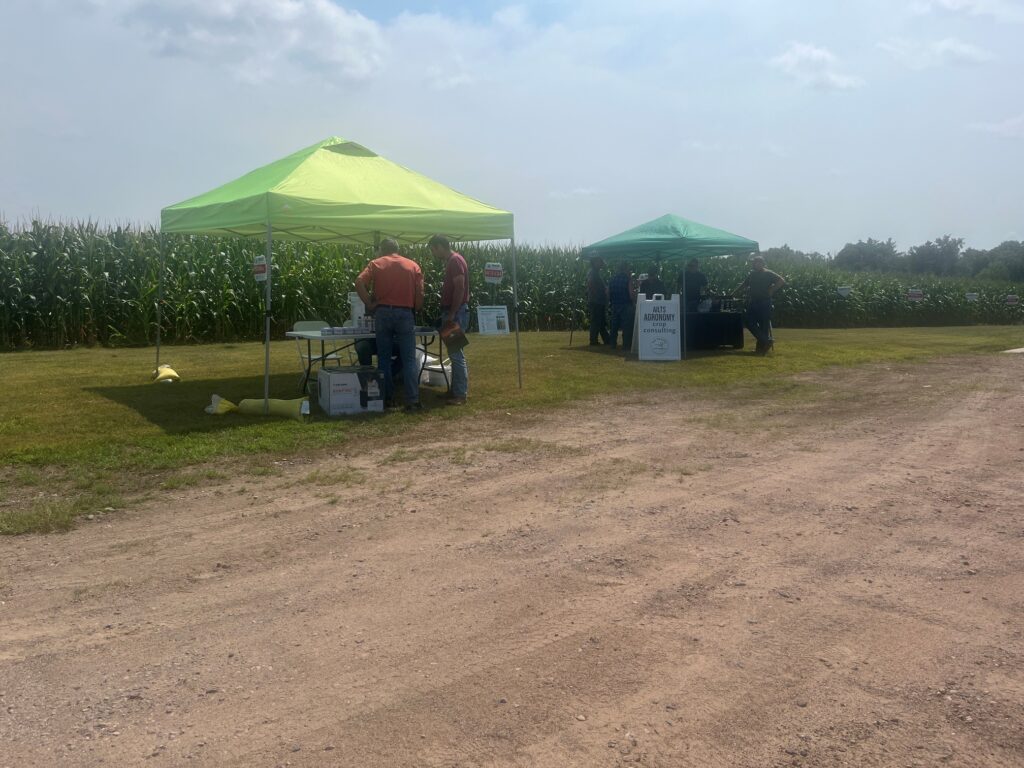
You may be wondering what exactly does a seed salesman’s customer appreciation day look like? Of course there’s lunch provided and some T-shirts and hats handed out as a way to say thank you for doing business, but there’s a fun educational piece to the day as well!
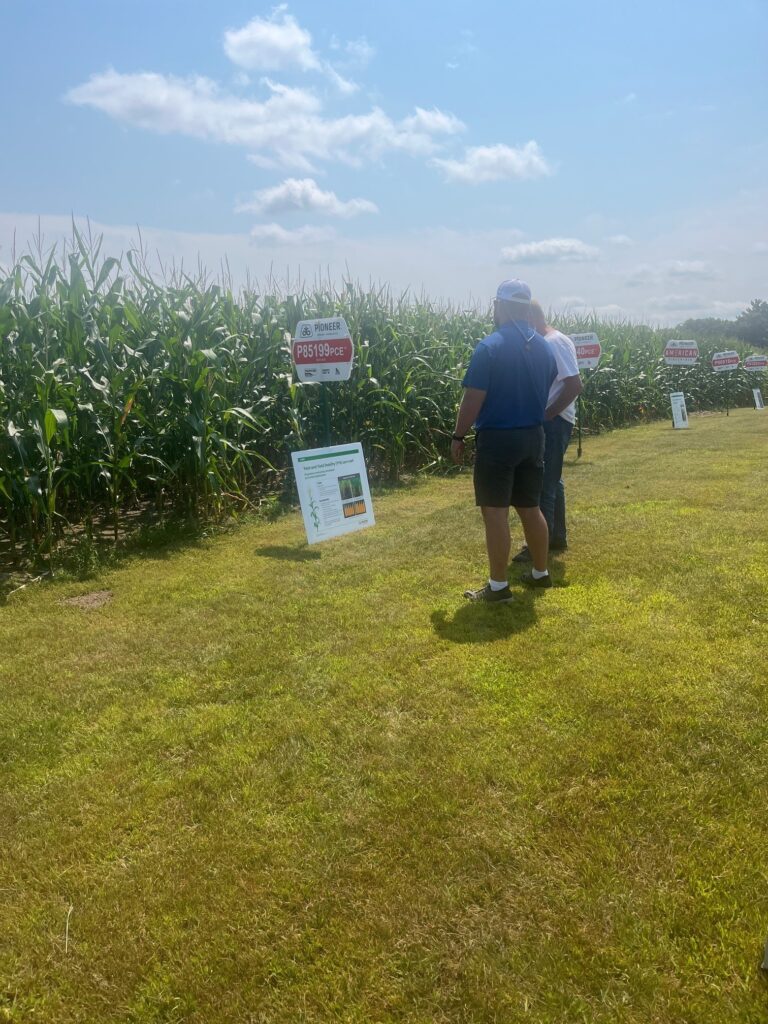
The past few years my husband’s company has put together a mini trade show. They invite several vendors that they work with to set up stations for customers to go around and ask questions. Their customers get to talk to the “experts” about products they’re using, what’s going right, what’s going wrong, and get advice on what adjustments need to be made next growing season. It’s a great way for farmers to learn about new technology and new products too!
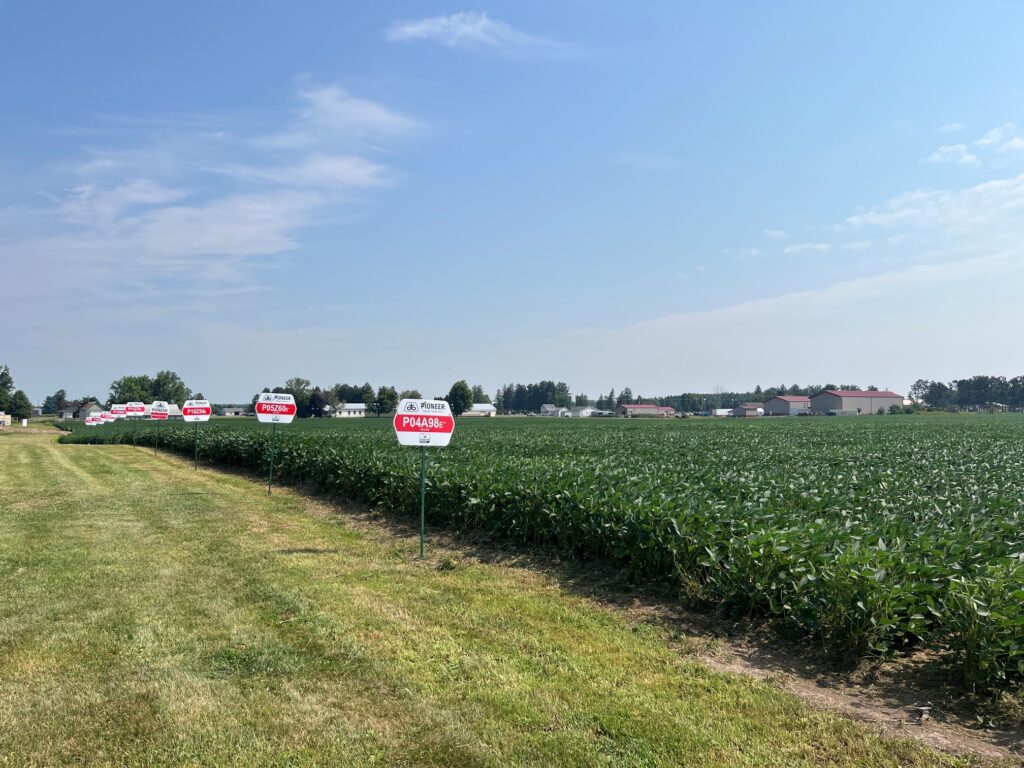
My favorite part of the day is getting to see the different farming families Interact, catch up, and learn from one another! There are only so many events a year that get a large group of farmers together in our community and it feels pretty special to be part of one of them. However, the main attraction of the day is probably the test plot. One of my husband’s customers happens to own the field right next to their business and has been gracious enough to let them use it for research the past few years!
What is a test plot? It’s a field planted with several different varieties of the same crop (in this case half the field is corn and the other half is soybeans). Just like you have different breeds of dogs or when you go to the grocery store there’s several types of apples that come in different sizes, colors, and flavors, there are different varieties of commodity crops too! This allows farms with different soil types and different climates to all be able to grow the same crop and be able to feed the world, they just have to do it a little differently to be (hopefully) profitable!
Not only do they plant crops with various genetics side by side to compare, but they can also trial out different products like fungicide, herbicide, etc. to truly compare what works in our area and what doesn’t. They plant varieties from the brand of seed my husband sells along with competitor brands as well. Depending on the test plot, they can have a variety of different trials going on all at once!
Data from this field and any other customers that put in test plots will be collected throughout the growing season, but especially during harvest. Then my husband and his business partners will take that data, analyze it, and present on it during a another customer meeting that they host in the winter. They will utilize that information to help their customers make educated decisions on their operations next growing season!
Even though we’re a few months out from harvesting and about 9 months out from planting the 2027 crops, farmers are already analyzing their fields, going to events like ours to help plan what varieties they want to plant next year, what products they want to apply, and calculating out what inputs are worth the investment. It won’t be long before seed orders start coming through. Some operations are making these decisions before the 2026 crops are harvested to lock in the best pricing. Others may wait for 2026 yield data to become available before placing their 2027 seed orders this winter. Either way, farmers will be eagerly waiting for spring to arrive so they can start the growing cycle all over again.
Farming is definitely a marathon, not a sprint. Every decision is critically analyzed and at the end of the day, mother nature is the true deciding factor on how well the crops yield come fall.